Let me tell you what this site is not.
It’s not a doomsday blog. It’s not a collection of survivalist fantasies written by someone waiting for civilization to collapse. It’s not fear-mongering dressed up as preparedness advice, and it’s not a gear catalog disguised as a resource.
What it is — what I built it to be — is the site I wished existed when I started taking my family’s safety seriously over a decade ago. Practical. Honest. Grounded in real experience. Written by someone who has actually lived through the emergencies they’re writing about and who has spent years thinking carefully about the ones they haven’t.
I’m not going to tell you my name. What I will tell you is everything that actually matters about who I am and why you should read what I write.
Who I Am
I’m someone who lives in the South and has for most of my life. I know what it means to watch a tornado warning scroll across the bottom of a television screen and feel the air change outside. I know what it means to be alone in a house on the Florida Panhandle while a Category 5 hurricane makes landfall — watching trees that have stood for decades get pulled out of the ground like they were nothing, waiting to see if the roof holds, knowing that whatever happens next you’re handling it yourself until the storm passes.
I’m a husband and a father. I have a toddler at home. I serve on the security team at my church. I’ve pulled people from wrecked vehicles on the side of the road. I’ve responded to medical emergencies. I’ve had my phone’s SIM card cloned by a hacker who cleaned out my cryptocurrency wallet and locked me out of my own work systems simultaneously. I’ve watched a small grass fire on the side of an interstate grow in real time and pulled over to fight it with water from my car while calling the fire department.
I’ve also sat in my home during a widespread ice storm that knocked out power across our entire state for three days — cooking on a wood burning stove, grilling on propane tanks I’d had the foresight to stock in advance, keeping my family’s devices charged through a solar generator and a car adapter while my neighbors scrambled.
None of that makes me a professional. I’m not a first responder, a military veteran, or an emergency management official. I don’t have credentials on a wall that authorize me to give you advice.
What I have is ten years of genuine, committed, real-world preparedness — built for my actual family, tested in actual emergencies, refined through actual experience and honest failure. I’ve read everything FEMA and the Red Cross publish. I’ve studied real events and drawn real lessons from them. I’ve rebuilt my go bags multiple times as my family has grown and changed. I’ve made mistakes and corrected them.
I’ve also spent enough time paying attention to know something that most people don’t want to admit: emergencies don’t announce themselves politely. They don’t wait until you’re ready. They don’t skip your neighborhood because it seems like a nice place. They come when they come, and when they do the gap between prepared and unprepared becomes visible almost immediately.
I live on the prepared side of that gap. This site exists to help you get there too.
Why I Started This Site
For a long time, preparedness was something I did quietly for my family. I didn’t talk about it much. It wasn’t a hobby or an identity — it was just something I considered a basic responsibility, like having insurance or changing the oil in my car. You do it because the cost of not doing it is too high.
But over the years I kept noticing the same thing: when emergencies happened — storms, power outages, civil unrest, shootings near people I loved — the people around me were consistently caught off guard in ways that were entirely preventable. Not because they were careless or irresponsible people. Because nobody had ever given them the practical, honest, experience-based information they needed to prepare.
The preparedness content that exists online is a mixed bag. Some of it is excellent. A lot of it is generic, overly technical, or written in a voice so clinical and impersonal that it reads like a government pamphlet rather than advice from someone who actually knows what they’re talking about. And almost none of it sounds like a real person sharing what they’ve actually learned from living through real things.
That’s the gap I’m trying to fill.
Every post on this site is written in my voice — direct, personal, and honest about what I know from experience versus what I’ve learned from research. When I’ve been through something, I’ll tell you exactly what happened and what I took away from it. When I haven’t, I’ll tell you that too and share the best guidance I’ve found from people who have.
I won’t pretend to know things I don’t. I won’t dress up theory as experience. And I won’t waste your time with advice that sounds good on paper but falls apart the moment real conditions apply pressure to it.
What You’ll Find Here
This site covers the full range of emergencies that ordinary families in the South — and across the United States — are realistically likely to face.
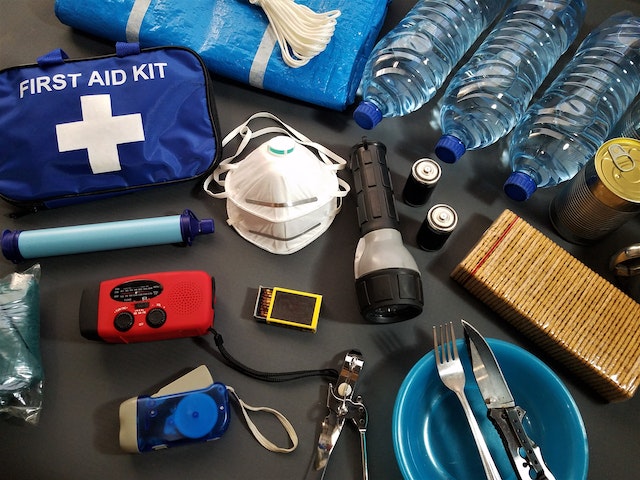
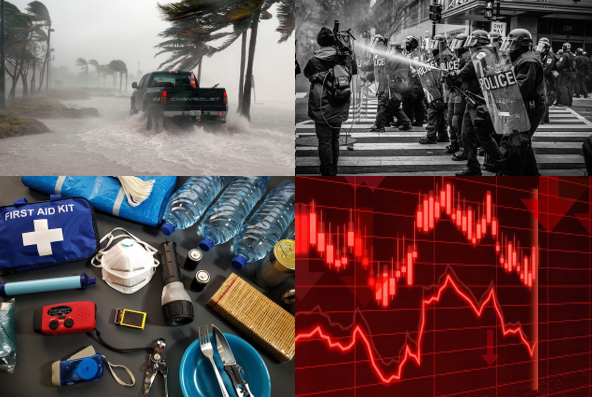
Natural disasters — hurricanes, tornadoes, floods, wildfires, earthquakes, ice storms. Man-made emergencies — civil unrest, active shooter situations, terrorism, chemical spills, cyber attacks. Infrastructure failures — power outages, grid-down scenarios, water shortages, banking crises. And the everyday preparedness fundamentals that apply across all of them — bug out bags, get home bags, vehicle kits, food storage, water storage, medical response, and more.
Each topic gets the same treatment: honest assessment of the threat, real experience where I have it, practical preparation steps you can actually implement, and specific gear recommendations for things I genuinely believe in. You’ll find affiliate links throughout the site — products I recommend because I’ve used them or researched them thoroughly, not because someone paid me to mention them. When you purchase through those links I may earn a small commission that helps keep this site running. I’m transparent about that because I think you deserve to know.
What you will never find here is fear for fear’s sake. I’m not trying to frighten you into clicking or buying. I’m trying to give you the information and the tools to face whatever comes with confidence rather than panic.
A Word on Who This Site Is For
This site is for ordinary people who take their family’s safety seriously. You don’t need to be a survivalist or a prepper or someone who thinks about worst-case scenarios every waking moment. You just need to be someone who has decided — or is deciding — that being prepared is worth the modest investment of time and resources it requires.
It’s for the parent who realized after a close call that they weren’t as ready as they thought. For the homeowner who sat through a bad storm and started wondering what would have happened if it had been worse. For the spouse who wants their family to be the one that handles an emergency calmly instead of the one that scrambles.
It’s for anyone who has looked at the world lately and decided that hoping nothing goes wrong isn’t a plan.
If that sounds like you, you’re in the right place.
Where to Start
If you’re new to preparedness and not sure where to begin, I’d suggest starting with the fundamentals — water storage, food storage, and your basic emergency kit. These three elements form the foundation that everything else builds on. From there, read the posts most relevant to the specific threats in your area. If you’re in tornado country, start there. If you’re on the Gulf Coast, the hurricane post is your first stop.
If you’ve been preparing for a while and you’re looking to fill gaps or refine what you have, browse by category and focus on the areas where you know you’re weakest.
However you found this site and wherever you’re starting from — welcome. I’m glad you’re here. The fact that you’re reading this means you’ve already made the most important decision in preparedness, which is simply the decision to take it seriously.
Everything else follows from that.
Stay ready.