There’s a preparedness scenario that doesn’t get nearly enough attention, and it’s one of the most likely emergencies any of us will actually face: you’re not at home when something goes wrong.
You’re at work. You’re running errands. You’re at the gym. And suddenly — a major power grid failure, a natural disaster, a civil unrest situation, a terrorist event — the normal systems that move you through your day stop working. Your car won’t start, roads are blocked, or conditions make driving dangerous or impossible. Your phone may or may not be working. And between you and your family is some number of miles that you now have to cover on foot.
Do you have what you need to make that journey?
That’s what a get home bag is for. Not a bug out bag — which is built for leaving home and surviving away from it. A get home bag is built for one specific mission: getting you from wherever you are back to your family, on foot if necessary, under adverse conditions.
I keep one in my vehicle at all times. My wife keeps one in hers. They’re built differently — because our needs are different, and because her bag now includes everything required to get our toddler home safely if she has them when something goes wrong. I’ll get to that in a moment, because I think it’s one of the most important and most overlooked aspects of get home bag planning for parents.
Why a Get Home Bag Is Different From a Bug Out Bag
I cover bug out bags in detail in a separate post on this site, and if you haven’t read it I’d encourage you to do so. But understanding the difference between the two is important before we talk about what goes in a get home bag.
A bug out bag is built for extended survival away from home — 72 hours minimum, ideally longer. It’s comprehensive, it’s relatively heavy, and it’s designed to sustain you through a wide range of scenarios over multiple days.
A get home bag is built for a single focused mission with a defined endpoint. The mission is getting home. The endpoint is your front door. Everything in the bag serves that mission and nothing else.
That focus changes what you pack. You don’t need a week of food — you need enough calories to fuel a long walk. You don’t need an extensive shelter system — you need weather protection for a day. You don’t need a full first aid kit — you need enough to handle an injury on the move without stopping your progress.
Lighter. More focused. Built for movement rather than extended survival in place.
How Far Could You Actually Be From Home?
The first question to answer when building a get home bag is simple: what’s the worst case distance between you and your home on any given day?
For me that’s roughly 20 miles — the distance from my farthest regular destination back to my house. Twenty miles on foot is a serious undertaking under normal conditions. Under emergency conditions — carrying a bag, potentially in adverse weather, on roads that may be congested or dangerous — it becomes genuinely challenging. Plan honestly for that distance, not optimistically.
Think through everywhere you regularly go. Work. Your kids’ school. The gym. Your regular grocery store. Your place of worship. Map the distances. Your get home bag needs to be built for the worst case in that list, not the average.
What I Keep in My Get Home Bag
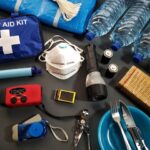
My bag stays in my vehicle year-round. Here’s what’s in it and why each item earns its place.
Sturdy, comfortable walking shoes or boots. This might be the single most important item in the bag. If you’re at work in dress shoes or at the gym in workout shoes when an emergency happens, the idea of walking 20 miles in those shoes ranges from uncomfortable to genuinely dangerous. A pair of broken-in, sturdy walking shoes or lightweight boots in your bag means you start that journey with your feet properly protected. Blisters that develop in mile three of a twenty mile walk are not a minor inconvenience — they can be debilitating.
Weather-appropriate clothing. A lightweight packable rain jacket takes up minimal space and protects you from conditions that would make a long walk miserable or dangerous. In colder months I add a warm layer and gloves. Getting wet and cold on a long walk under stress is a recipe for hypothermia — even in temperatures that don’t seem extreme. I adjust my bag seasonally the same way I do my bug out bag.
Water and a filtration method. Carry at least one full water bottle — two if the weight is manageable. A filter straw or purification tablets extend your water supply to any source you encounter along the way. Dehydration degrades your physical performance and your decision making simultaneously. Stay ahead of it.
High calorie, compact food. Energy bars, jerky, nuts, and dried fruit provide the calories needed to fuel a long walk without adding significant weight. This isn’t about comfort eating — it’s about maintaining the physical energy to complete the mission. I rotate these out regularly so they’re always fresh.
A detailed paper map of your area. Cell service may be down or your phone battery may be dead. A paper map of your city and surrounding area — one you’ve actually looked at and understand — means you can navigate without any technology. Mark your home, your regular destinations, and potential alternate routes in advance. Do this now, not during an emergency.
A compass. Paired with your paper map, a basic compass ensures you can navigate even in unfamiliar areas or situations where landmarks aren’t visible. It weighs almost nothing.
A flashlight or headlamp with fresh batteries. If your journey extends into darkness — which is a real possibility depending on when the emergency occurs and how long the walk takes — you need reliable light. A headlamp keeps your hands free, which matters when you’re navigating terrain or carrying additional items.
A portable battery bank. Keep your phone charged as long as possible. Even if cell networks are down, your phone may still be useful for offline maps, stored contact information, and a flashlight. A charged battery bank weighs very little and provides meaningful backup power.
A basic first aid kit. Compact and focused — bandages, blister treatment, pain relievers, and any personal medications. Blisters and minor injuries on a long walk can become serious problems if untreated. Address them quickly and keep moving.
Cash. If any businesses are operating during the emergency, cash is the only reliable payment method. Keep small bills.
A multi-tool or knife. Handles a wide range of unexpected needs without adding significant weight.
A whistle. If you need to signal for help, a whistle carries far farther than your voice and requires no energy to use.
A high-visibility vest. If your route takes you along roads — which it likely will for much of a 20-mile walk — being visible to any vehicles that are moving is an important safety consideration. The same vest I keep for roadside vehicle emergencies does double duty here.
A written list of critical contact information. Phone numbers for family members, your home address, and your meeting point — written on paper, not just stored in your phone. If your phone dies or is damaged, this information needs to exist independently.
My Wife’s Bag: Building a Get Home Bag for a Parent With a Young Child
I want to spend meaningful time on this because it’s something almost no get home bag content addresses — and for parents with young children, it changes everything about how you approach this.
My wife’s get home bag is actually larger than mine. Not because she needs more survival gear, but because her bag accounts for the possibility that she has our toddler with her when something goes wrong.
Think about that scenario for a moment. An emergency occurs. She’s out running errands with our child. She can’t drive home. She has to walk. And she has a toddler who cannot walk 20 miles.
Her bag includes a baby carrier — the kind that secures an infant or toddler to your chest or back, leaving your hands free. If you have a young child and you haven’t thought about how you would physically transport them on foot for an extended distance, think about it now. A stroller is not a viable option on roads that may be congested, damaged, or impassable. A carrier that distributes the child’s weight across your body is the practical solution.
Beyond the carrier, her bag includes diapers and wipes for an extended period, baby food and formula appropriate for our child’s current needs, a familiar comfort item to help keep a frightened toddler calm, children’s pain reliever and basic pediatric first aid supplies, and a change of clothes for the baby.
All of this adds weight and volume. That’s the reality of being a parent, and the bag is built to accommodate it. The alternative — being caught without these supplies while trying to get a toddler home safely — is not acceptable.
If you have children of any age, your get home bag planning needs to specifically account for their needs and their physical limitations. A school-age child can walk some distance but not 20 miles. A teenager can carry their own bag. An infant or toddler needs to be carried. Plan honestly for your actual family situation.
Where to Keep It and How to Maintain It
Your get home bag lives in your vehicle. Not in your house, not in your office — in your car, where it’s with you whenever you’re away from home. That’s the entire point. A get home bag you left at home when you drove to work is useless.
Keep it somewhere accessible — not buried under everything in your trunk. In a real emergency, you need to be able to grab it quickly and move.
Maintain it the same way I maintain my bug out bag. Rotate food and water regularly. Check batteries. Swap seasonal clothing when the weather changes. Make sure everything is in working order and within expiration dates. Set a recurring reminder and actually check it.
One additional maintenance consideration specific to vehicles: extreme heat in a parked car degrades food, water, and batteries faster than storage at home. In summer months, pay particular attention to the condition of anything heat-sensitive in your bag and rotate it more frequently.
One More Thing: Know Your Route Before You Need It
A get home bag gives you the supplies to make the journey. But knowing the route before you need it gives you the confidence and efficiency to actually complete it.
Drive your most likely walking routes home from your regular destinations. Note landmarks. Identify where you’d find water sources along the way — streams, parks, gas stations that might be open. Note areas that might be dangerous or congested in an emergency and plan your alternates around them.
This mental preparation costs you nothing and pays significant dividends in a real emergency. The person who knows where they’re going moves faster, makes better decisions, and arrives home in better shape than the person navigating unfamiliar terrain under stress for the first time.
A Final Word
The get home bag is the piece of emergency preparedness gear most directly connected to the scenario most of us are most likely to actually face. You are away from home for a significant portion of every day. Emergencies don’t wait for you to be in the right place.
Build your bag. Put it in your car. Build one for your spouse that honestly accounts for your children’s needs. Know your route. And take genuine comfort in the fact that if something goes wrong while you’re out in the world, you have what you need to get back to your family.
That’s the whole point of all of this.
Stay ready.
Note: Some links in this post are affiliate links. If you purchase through them, I may earn a small commission at no extra cost to you. I only recommend gear I actually believe in.