Most people in the South don’t think of wildfires as their problem. Wildfires are a California thing, a Western thing, a dry climate thing. That assumption has cost lives — and I’ve seen firsthand how quickly fire can start and spread when conditions are right, even in places you’d never expect.
I was driving down the interstate one afternoon when I noticed a small fire burning in the median. The grass was tall and dry, the wind was blowing, and I knew immediately what I was looking at — something small that was about to become something serious. I pulled over, ran back to the fire, and started pouring water on it while I called the fire department. I put out some of it, but the wind kept pushing the flames and I couldn’t get ahead of it. The fire department arrived and handled the rest.
When they finished, one of the firefighters told me they see this constantly. A driver throws a cigarette out the window. The wind keeps the ember alive just long enough for it to find dry grass. And a fire starts. That’s all it takes.
That experience taught me two things I want to share with you before we get into the broader topic of wildfire preparedness. First — keep a fire extinguisher and at least one gallon of water in your vehicle at all times. Not for dramatic emergencies. For exactly this kind of ordinary moment where having the right tool makes the difference between stopping something small and watching it grow into something that can’t be stopped. Second — wildfire awareness isn’t just for people who live in the mountains or the western United States. It starts on the side of an interstate, with dry grass and a discarded cigarette, and it can grow faster than you expect.
I haven’t experienced a full-scale wildfire evacuation personally. But I’ve studied real events carefully, I follow guidance from FEMA and the National Fire Protection Association, and I’ve thought seriously about this threat as part of a complete preparedness plan. What I share here comes from that research and from the same honest, practical approach I bring to every topic on this site.
Why Wildfires Are More of a Southern Threat Than Most People Realize
The Great Smoky Mountains area of Tennessee saw devastating fires in 2016 that killed fourteen people, destroyed over 2,400 structures, and forced tens of thousands of residents and tourists to evacuate with almost no warning. The fires moved faster than anyone anticipated and caught communities completely off guard.
Wildfires don’t require a western drought to be deadly. They require dry conditions, wind, and fuel — and the South has all three, particularly in late summer and fall. Tall dry grass along interstates. Wooded rural communities with limited road access. Extended dry spells that leave vegetation primed to ignite. The threat is real here, and dismissing it based on geography is a mistake.
And as I witnessed personally, wildfires don’t always start dramatically. They start with something small — a cigarette, a spark, an ember — in the right conditions at the right moment. The scale of the damage that follows depends entirely on how quickly someone notices and responds.
Why Wildfires Are Different From Other Emergencies
Every emergency I cover on this site has its own character. Wildfires have a character that makes them particularly challenging for civilians to navigate effectively.
They move faster than people expect. A wildfire driven by wind can travel faster than a person can run. The 2018 Camp Fire in California — the deadliest in that state’s history — moved so fast that residents had minutes to evacuate, not hours. People died in their cars trying to flee. Speed is the defining characteristic of a dangerous wildfire and the primary reason early evacuation is so critical.
They generate their own weather. Large wildfires create their own wind patterns and atmospheric conditions that cause the fire to behave unpredictably. A fire that appears to be moving away from you can shift direction rapidly and without warning. Never assume you can anticipate what a wildfire will do.
Smoke kills independently of flames. Wildfire smoke contains carbon monoxide, fine particulate matter, and toxic compounds from burning structures and vegetation. Smoke inhalation can be incapacitating and deadly at distances far from the actual fire. People who are never directly threatened by flames can be seriously harmed by smoke exposure alone.
Embers travel and ignite structures at a distance. Burning embers — firebrands — can be carried by wind for a mile or more ahead of the fire front and ignite structures well beyond the visible fire line. A house can catch from embers landing in a gutter full of dry leaves or on a wood deck — not from direct flame contact. This ember cast is responsible for the majority of structure losses in major wildfire events.
Evacuation routes close faster than people expect. As fires spread, they can block roads faster than evacuation traffic can clear them. People who wait too long sometimes find themselves trapped. Early evacuation is almost always safer than late evacuation.
Understanding Wildfire Alerts and Warning Levels
When wildfire threatens your area, emergency managers communicate risk through a tiered warning system. Know these levels before you need them.
Fire weather watches and red flag warnings are issued by the National Weather Service when conditions are favorable for wildfire ignition and spread — low humidity, high winds, and dry fuels combining to create elevated risk. No fire may be burning near you yet. This is your signal to pay close attention and review your preparedness.
Evacuation warning means a wildfire threatens your area and you should be prepared to leave immediately. This is your signal to finalize preparations, load your vehicle, and be ready to go at a moment’s notice. Take this level seriously — don’t wait for the next one.
Evacuation order means leave now. Immediately. Without delay. Every minute you spend after an evacuation order is issued narrows your margin of safety. Go.
Sign up for your county’s emergency alert system to receive these notifications directly on your phone. Don’t rely on smelling smoke or watching the news — by the time you smell smoke, your window may already be closing.
Vehicle Preparedness: Your First Line of Wildfire Defense
I want to circle back to what I learned on that interstate because I think it’s one of the most underappreciated wildfire preparedness steps available to anyone.
Keep a fire extinguisher and at least one gallon of water in your vehicle at all times.
A small fire encountered in the right moment — before wind and dry fuel have given it momentum — can be stopped by one person with basic equipment. I stopped a portion of that median fire before the fire department arrived. A fire extinguisher would have given me significantly more capability. The window for stopping a small fire is measured in minutes. Having the tools to act in that window requires having them with you.
Beyond the direct firefighting application, a fire extinguisher in your vehicle is valuable for vehicle fires — which are more common than most people realize — and for any other small fire situation you might encounter. It’s a low-cost, high-value addition to any vehicle kit.
This connects directly to my vehicle emergency preparedness post — if you haven’t read it, the overlap between vehicle preparedness and wildfire preparedness is more significant than most people recognize.
Preparing Your Home Before Wildfire Season
One of the most important aspects of wildfire home preparedness is defensible space — the area around your home that you manage to reduce available fuel and slow a fire’s approach.
The immediate zone — zero to five feet from your home. This is the most critical area. Eliminate all combustible materials — dead plants, dry leaves, wood mulch, and anything else that ignites easily. Use non-combustible materials like gravel or stone in this zone. Embers landing here can spread directly to your home’s exterior.
The intermediate zone — five to 30 feet. Keep grass mowed short, space plants and shrubs so fire cannot easily travel between them, remove dead vegetation regularly, and prune tree branches up from the ground to prevent ground fire from climbing into the canopy.
The extended zone — 30 to 100 feet. Continue reducing fuel density — thin trees, remove dead wood, and keep the area generally clear. This zone gives a fire less fuel to build intensity as it approaches.
Address your home’s specific vulnerabilities. Embers enter structures through vents, under doors, through gaps in siding, and into gutters full of leaves. Screen vents with fine metal mesh. Keep gutters clean. Replace wood decking and fencing with fire-resistant materials where possible. These investments meaningfully reduce your home’s ignitability.
Store combustibles away from your structure. Firewood stacks, propane tanks, and outdoor furniture stored against your home provide fuel for fire to reach your structure. Move them away from the immediate zone.
Building Your Wildfire Go Bag
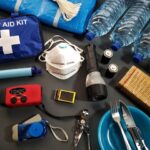
If you’ve read my bug out bag post you already have a strong foundation. The core contents are the same — water, food, first aid, documents, cash, medications, communication, and power. Wildfire adds a few specific items.
N95 or higher respirator masks for every family member. Wildfire smoke is genuinely hazardous and exposure during evacuation is almost unavoidable. A properly fitted N95 respirator filters fine particulate matter and provides meaningful protection. These are inexpensive, lightweight, and non-negotiable in a wildfire-prone area.
Eye protection. Smoke, ash, and airborne debris during evacuation can be intense. Safety glasses or goggles protect your eyes and help you stay oriented in smoky conditions.
Natural fiber clothing covering all skin. Wool and cotton are more fire resistant than synthetics, which can melt. Cover exposed skin during evacuation through smoky environments.
Extended medication supply. Wildfire evacuations can last days or weeks. Make sure your go bag includes enough prescription medications for an extended displacement.
Preparing to Evacuate Before the Order Comes
The families who evacuate safely from wildfires are overwhelmingly the ones who left early — before conditions deteriorated, before roads became congested, and before fire behavior became unpredictable. Here’s what to do before wildfire season begins — not when a fire is already burning near you.
Know your evacuation routes in advance. Identify at least two routes out of your neighborhood using different roads and different directions. Drive them now. Know which roads are most likely to be affected by fire and which offer the best chance of staying clear. Keep a paper map in your vehicle — GPS can be compromised when cell networks are overwhelmed during a major emergency.
Designate a meeting point and an out-of-area contact. If family members are separated when an order is issued, everyone needs to know where to go and how to communicate. An out-of-area contact outside the potential evacuation zone provides a communication anchor when local networks are overwhelmed.
Decide what you’re taking before you need to decide. Make a list now of items beyond your go bag — irreplaceable photos, specific valuables, medications, pet supplies. Having that list means you’re executing a plan under pressure rather than making decisions.
Load your vehicle when a warning is issued. An evacuation warning — not an order, a warning — is your signal to load your vehicle. Go bag in. Irreplaceable items in. Pets in. Be ready to drive the moment conditions warrant leaving. A loaded vehicle means your evacuation takes minutes.
Harden your home before you leave if time allows. Only if you have time — never at the expense of leaving early. Close all windows, doors, and vents. Remove lightweight combustibles from decks and porches. Leave exterior lights on so your home is visible in smoke. Shut off gas at the meter. Fill large containers with water in case firefighters need a source. Leave your home unlocked so firefighters can enter if needed.
During a Wildfire Evacuation
Leave immediately when ordered. Every minute of delay narrows your margin of safety. Go without hesitation.
Keep windows up and air recirculation on. Driving through smoky conditions with windows down exposes you to significant smoke inhalation. Keep windows closed and set your ventilation to recirculate interior air.
Be prepared to adapt your route. Know your primary and alternate routes and be ready to switch if your primary is blocked. If you encounter a road blocked by fire, turn around immediately. Never attempt to drive through flames or heavy smoke.
If trapped by fire while driving: Pull off the road as far as possible. Turn off the engine. Turn on hazard lights. Get on the floor and cover yourself with a blanket or coat. Stay in the vehicle — it provides more protection than being outside. Call 911 and give your exact location. Stay low until the fire front passes.
If trapped at home when fire arrives: Close all interior doors to slow fire spread. Fill sinks and tubs with water. Turn on all interior lights so the home is visible in smoke. Signal from a window with a flashlight or bright cloth. Call 911 and stay on the line. Stay in the interior room furthest from the approaching fire.
After the Wildfire
Do not return until authorities confirm it is safe. Post-fire environments contain hazards not immediately visible — unstable structures, smoldering hotspots, downed power lines, toxic ash, and compromised air quality. Wait for the official all-clear.
Treat all ash as toxic. Wildfire ash contains heavy metals, asbestos from older structures, and toxic compounds from burned materials. Wear an N95 mask and gloves during any contact with ash. Wet ash before disturbing it to reduce airborne particulate. Keep children and pets away from ash-covered surfaces.
Document all damage before cleanup. Photograph and video everything before touching anything. This documentation is critical for insurance claims and disaster assistance applications.
Watch for flooding in the aftermath. Wildfire destroys vegetation that holds soil in place, dramatically increasing mudslide and flash flood risk in burned areas during subsequent rainfall. Pay close attention to flood and mudslide warnings if rain follows the fire.
A Final Word
I pulled over on that interstate because something small was about to become something serious and I had the chance to do something about it. I had water in my vehicle. I made the call. I acted.
That’s what wildfire preparedness looks like at the individual level — not just building defensible space and planning evacuation routes, though those matter enormously. It’s also being the person who notices something early, has the basic tools to respond, and doesn’t drive past.
Keep water and a fire extinguisher in your vehicle. Know your evacuation routes. Build your defensible space before fire season. Leave early when warnings are issued.
And pay attention when you’re driving. Sometimes the most important wildfire response happens before the fire department ever gets the call.
Stay ready.
Note: Some links in this post are affiliate links. If you purchase through them, I may earn a small commission at no extra cost to you. I only recommend gear I actually believe in.