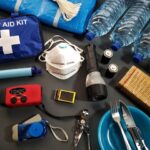
Of all the resources your family depends on to survive, water is the one that becomes critical fastest. You can go three weeks without food. You cannot go three days without water. In a serious emergency — a grid-down event, a natural disaster, an infrastructure failure, a chemical contamination of your water supply — the families who have water stored are in a fundamentally different situation than those who don’t.
I have a 30-day water supply for two people stored in my home right now. Not in a giant 55-gallon barrel in the garage. Not in an elaborate rainwater collection system. In sixty one-gallon jugs of water that I bought at Dollar Tree, stacked neatly in a dedicated storage space, ready when I need them.
I’m going to tell you exactly how I did it — because the method matters as much as the result, and because this is one of the most affordable and practical preparedness steps any family can take regardless of their budget or their living situation.
Why Water Is Your Most Critical Preparedness Priority
The human body is approximately 60 percent water. Every major system — cardiovascular, digestive, neurological — depends on adequate hydration to function. Dehydration begins affecting cognitive function and physical performance well before it becomes life-threatening. In a stressful emergency situation where you need to think clearly and act effectively, even mild dehydration makes you meaningfully less capable.
Beyond drinking, water is essential for cooking, sanitation, wound care, and medication management. The one-gallon-per-day standard that FEMA recommends covers drinking and basic sanitation combined under relatively normal conditions. In hot weather, during physical exertion, for nursing mothers, for young children, and for anyone with certain medical conditions, that number needs to be higher.
And unlike food — where you can stretch rations and adjust consumption — water shortages become critical quickly and leave almost no margin for error.
Build your water supply first. Everything else in your preparedness plan comes after.
What Can Disrupt Your Water Supply
Understanding the range of scenarios that can cut off your water helps clarify why this preparation matters regardless of where you live.
Infrastructure failure. Municipal water systems are complex networks of pumps, pipes, treatment facilities, and distribution infrastructure — all of which can fail. A major pump failure, a main line break, or damage to a treatment facility can disrupt water service across an entire community with very little warning.
Power grid failure. As I covered in my grid-down preparedness post, most municipal water systems depend on electrically powered pumps to maintain pressure and distribute water. When the grid goes down, water pressure drops and eventually stops entirely. This is one of the most immediate practical consequences of an extended power outage.
Natural disasters. Earthquakes rupture water mains. Floods contaminate supplies with sewage, chemicals, and biological agents. Hurricanes and tornadoes damage both physical infrastructure and the power systems that water distribution depends on.
Chemical contamination. A chemical spill or industrial accident can render tap water unsafe to consume even when it’s still flowing. In these scenarios you may have water pressure but nothing safe to drink — which is exactly why stored water that predates the contamination event is valuable even when the tap appears to be working normally.
Aging infrastructure. The American Society of Civil Engineers consistently gives United States drinking water infrastructure poor marks. Water main breaks occur thousands of times every day across the country. The infrastructure delivering clean water to your tap is older and more stressed than most people realize.
How Much Water to Store
The standard recommendation from FEMA and the Red Cross is one gallon of water per person per day for a minimum of three days. I consider that a starting point, not a destination.
Three days of water prepares you for a short inconvenience. It does not prepare you for an extended infrastructure failure, a prolonged natural disaster, or a grid-down scenario. For those situations — the ones that genuinely test your preparedness — you need significantly more.
My personal standard is one gallon per person per day for 30 days. For two people that’s 60 gallons. For a family of four it’s 120 gallons. Those numbers sound large until you see how manageable the physical storage actually is — which brings me to the most important and most practical part of this post.
The Dollar Tree Method: How I Built My 30-Day Supply
I want to be specific here because the method I used is one I haven’t seen anyone else describe, and it solves a problem that stops a lot of people from actually building their water supply — the problem of storage and stackability.
Individual one-gallon water jugs are inexpensive and widely available. The problem is that they’re round at the bottom and awkward to store in quantity. You can’t stack them. They roll around. They take up more space than their volume warrants and they’re frustrating to organize.
Here’s what I did instead.
I went to my local Dollar Tree and bought one-gallon water jugs — but not individually. I bought them in the cardboard cases they’re shipped to the store in. Each case holds six one-gallon jugs and comes in a square, sturdy cardboard box. That box is the key.
Because the shipping case is square and structurally solid, you can stack them. Multiple cases stacked on top of each other take up a fraction of the floor space that the same number of individual jugs would require, and they stay organized and stable. It’s the difference between a chaotic pile of rolling jugs and a neat, manageable stack of uniform boxes.
The price is right too. Dollar Tree sells these gallon jugs at a price point that makes building a serious supply genuinely affordable — even on a tight budget.
Here’s how I approached the purchasing process, and how I’d recommend you do it:
Go to your local Dollar Tree and buy as many cases as they have in stock. Don’t buy individual jugs — ask specifically for the cases, or look for them in the back stocking area. Staff are generally happy to help. Take everything they have.
Then wait a few days and go back. Dollar Tree restocks regularly. When they do, buy whatever cases they have again. Repeat this process — visit, buy all available cases, wait for restock, repeat — until you have one gallon per person multiplied by your target number of days.
For me that meant 60 cases worth of visits over a couple of weeks. It didn’t happen in one trip, and it didn’t need to. The gradual purchasing approach also spreads the cost over time, which makes it easier on the budget.
Where to Store It
I store my water supply indoors in a cool, dry location — the same principle I apply to food storage. Heat and direct sunlight degrade plastic containers over time and can affect water quality. An interior room, a climate-controlled closet, or a cool basement are all good options.
The stackable case method means the footprint is surprisingly manageable. Ten cases of six gallons each — 60 gallons total — stacks into a space not much larger than a small bookshelf. It doesn’t require a dedicated storage room or a garage with extra space. A bedroom closet, a corner of a spare room, or a section of a pantry can accommodate a serious water supply when it’s stored in stackable cases rather than loose individual jugs.
Label each case with the date you purchased it. This makes rotation straightforward and ensures you always know what’s oldest in your supply.
Rotation: The Habit That Keeps Your Supply Current
Stored water doesn’t last forever. Commercially bottled water has a printed expiration date — the water itself doesn’t technically expire, but plastic can begin to affect taste over time and the quality of the seal can degrade. Rotate your supply on a regular schedule to keep everything fresh.
My rotation method is simple: use a case, replace a case. When I pull a case from storage to use for everyday purposes — drinking, cooking, whatever — I immediately add it to my shopping list and replace it on my next Dollar Tree run. The supply stays at 60 gallons continuously rather than depleting and needing to be rebuilt.
This is the same rotation principle I apply to food storage. The goal is a living supply that’s perpetually current — not a static stockpile sitting untouched until it’s needed and potentially past its best quality.
The Bathtub Backup
One of the most valuable and most overlooked water preparedness habits costs absolutely nothing and takes five minutes: filling your bathtubs before a storm or emergency arrives.
A standard bathtub holds 80 to 100 gallons of water. Filled from the tap before an emergency — before the water supply is disrupted — that’s a significant supplemental reserve for sanitation, cooking water that can be boiled, and other non-drinking uses.
A WaterBOB or similar bathtub bladder improves on the basic bathtub method by storing the water in a sealed plastic bladder that keeps it clean and protected from contamination. If you have advance warning of an emergency — a hurricane in the forecast, a winter storm approaching — filling a WaterBOB is one of the highest-value preparedness actions you can take in the hours before conditions deteriorate.
I’ve mentioned this in my hurricane and tornado posts, and I’ll repeat it here because it’s that important: fill your bathtubs before the storm. It costs nothing and takes almost no time.
Water Purification: Extending Your Supply
Your stored water is your primary resource. Water purification gives you the ability to extend that resource by making additional water from available sources safe to consume. No water preparedness plan is complete without purification capability.
Boiling is the most reliable method available to anyone with a heat source. A rolling boil for one minute — three minutes above 6,500 feet in elevation — kills virtually all biological contaminants. This is why having a wood stove, a propane camping stove, or a grill with stored fuel matters beyond just cooking food. In an emergency, your heat source is also your water treatment system.
Gravity filtration. A quality gravity filter like a Berkey processes large volumes of water without electricity or manual pumping and removes bacteria, parasites, heavy metals, and many chemical contaminants. It’s one of the most practical home water filtration investments available and works as a daily-use filter under normal conditions as well.
Portable filter straws and squeeze filters are compact, lightweight, and ideal for go bags, vehicle kits, and get home bags. They allow you to drink from natural water sources — streams, lakes, collected rainwater — when stored supplies are unavailable.
Water purification tablets are lightweight, inexpensive, and effective against biological contaminants. They belong in every emergency kit where weight and space are at a premium.
Household bleach can purify water in a last-resort scenario. The CDC provides specific dosage guidance — approximately eight drops of standard unscented chlorine bleach per gallon of clear water, with a 30-minute contact time. Keep this option in mind but treat it as a last resort rather than a primary method.
Additional Water Sources in an Emergency
When stored supplies run low and tap water is unavailable, knowing where to find additional water in your environment becomes important.
Natural water sources — streams, rivers, lakes — can provide water that, once properly purified, is safe to consume. Know where the nearest natural water sources are relative to your home. Moving water from an upstream source is generally preferable to stagnant water, but any source can be made safe with proper purification.
Rainwater collection is legal in most states and provides a renewable supplemental source. A simple rain barrel connected to a downspout collects meaningful quantities of water during rainfall and requires minimal purification for most uses.
Your water heater tank contains 30 to 80 gallons of relatively clean water accessible in an emergency. Know how to safely drain yours — it’s one of the most overlooked emergency water sources already in your home.
Swimming pools — yours or a neighbor’s — contain large volumes of water that can be purified for drinking and used directly for sanitation purposes. Pool chemicals at swimming concentrations make it unsuitable to drink without treatment, but the volume available makes it a significant resource in an extended emergency.
Accounting for Your Family’s Specific Needs
Standard water calculations assume average adult needs under average conditions. Your situation may require adjustment.
Infants and young children have proportionally higher hydration needs relative to their body weight, and formula preparation requires clean water. Account for this specifically in your storage calculations.
Hot weather and physical exertion both increase water needs substantially. In a summer emergency in the South without air conditioning — where you may be engaged in physical labor clearing debris, securing property, or evacuating on foot — your consumption will be meaningfully higher than the one-gallon baseline.
Pets need water too. A medium-sized dog needs roughly one ounce per pound of body weight per day. Include your animals in your calculations.
A Final Word
I built my 60-gallon water supply gradually, affordably, and practically — a few cases at a time from Dollar Tree, stacked neatly in a cool storage space, rotated regularly so it’s always fresh. It didn’t require a large upfront investment, a garage full of barrels, or any specialized equipment.
It just required starting and being consistent about it.
Water is the preparedness investment that requires the least thought and the most urgency. The math is simple. The method I’ve described is accessible to almost anyone regardless of budget or living situation. And the stakes — your family’s ability to survive and function in an emergency — are higher than almost any other preparedness category.
Start this week. Go to your Dollar Tree. Buy the cases, not the individual jugs. Go back when they restock. Keep going until you have what your family needs.
Use a case. Replace a case. That’s it.
Stay ready.
Note: Some links in this post are affiliate links. If you purchase through them, I may earn a small commission at no extra cost to you. I only recommend gear I actually believe in.