Most preparedness content focuses on natural disasters — hurricanes, tornadoes, floods. Those are real threats, and I cover all of them on this site. But there’s another category of emergency that doesn’t get nearly enough attention, partly because it makes people uncomfortable to talk about: civil unrest.
Riots. Protests that turn violent. Looting. Neighborhoods on fire. These things happen in America. They happened in 2020 on a scale most of us had never seen in our lifetimes, and they’ve happened in cities large and small throughout history. If you think it can’t happen in your city, I’d encourage you to reconsider.
I’ve never been in the middle of a violent uprising. But I’ve lived near enough to civil unrest to take it seriously, I have close friends in law enforcement who have dealt with it firsthand, and I’ve studied enough real-world events to know what preparation looks like versus what panic looks like. I’ll share both in this post.
What Is Civil Unrest and Why Should You Prepare for It?
Civil unrest refers to any situation where public order breaks down — protests, riots, strikes, or any form of mass disturbance that creates danger for ordinary people nearby. It can be triggered by political events, economic hardship, racial tensions, a controversial verdict, or sometimes simply by opportunists who use a legitimate grievance as cover for violence and looting.
The danger isn’t always direct. You may never throw a punch or have one thrown at you. But civil unrest creates cascading problems that affect everyone in the area — roads get blocked, businesses close or get looted, police are stretched thin, supply chains get disrupted, and the general sense of safety that most of us take for granted disappears quickly.
The good news is that unlike a tornado or an earthquake, civil unrest almost always comes with some warning. Planned marches and protests are announced. Tensions in a community build visibly before they boil over. That warning window is your opportunity to prepare and position your family safely — if you’re paying attention.
What I’ve Done Personally
A few years ago, a planned protest march was scheduled to pass through an area near my church. Our congregation takes our community seriously, and a group of us organized a security team to remain on the property while the march passed by. We weren’t looking for trouble — we were simply being responsible stewards of a place that matters to a lot of people. We watched, we stayed calm, and the march passed without incident.
That experience taught me something important: organized, calm presence is preparation. We didn’t react. We weren’t afraid. We had a plan, we had communication, and we knew exactly what we would do if things escalated. Nothing did — but we were ready if it had.
On other occasions when civil unrest was possible in my area, I made a simpler choice: I kept my family on the other side of town entirely and avoided the situation altogether. That’s not cowardice — that’s smart. The best self-defense is not being there. The best way to protect your family from civil unrest is to not be anywhere near it.
The Dangers of Civil Unrest
Before we talk preparation, let’s be honest about what civil unrest can actually look like at its worst, because understanding the threat is the foundation of preparing for it.
Violence can escalate rapidly and unpredictably. What begins as a peaceful demonstration can turn dangerous within minutes. My law enforcement friends have described situations where the crowd dynamic shifted faster than anyone anticipated — including the protesters themselves.
Looting and vandalism often target businesses in the immediate area, including grocery stores, pharmacies, and gas stations. Losing access to those resources — even temporarily — affects everyone in the neighborhood, not just the business owners.
Road closures and blocked access can trap you in an area or prevent you from getting home. During active unrest, GPS routes that look clear on your phone may lead you directly into danger.
Police resources get stretched thin. Response times increase. In severe situations, certain areas may effectively be without law enforcement presence for a period of time. I’m not saying that critically — it’s simply the reality of what happens when civil unrest is widespread.
Extended disruption is possible. Some unrest events have lasted days or even weeks, affecting entire cities and disrupting normal life far beyond the immediate area of conflict.
How to Prepare Before Civil Unrest Happens
The time to prepare is not when you’re watching news helicopters circle your neighborhood. Here’s what I recommend doing now, before any specific threat exists.
Know your area. Understand which parts of your city have historically been flashpoints for unrest. Know the routes in and out of your neighborhood. Identify alternative roads home that avoid downtown areas, major intersections, and gathering points. Drive them now so they’re familiar.
Stay informed habitually. Follow local news, local law enforcement social media accounts, and community apps like Nextdoor. When tensions are rising in your city, you want to know before it becomes a breaking news event. Situational awareness isn’t paranoia — it’s paying attention.
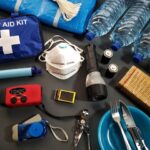
Have supplies on hand. Civil unrest can disrupt access to stores and services quickly. The same emergency supplies I recommend for any disaster apply here — water, food, first aid, medications, backup power, and cash. If stores are closed or unsafe to visit, you need to already have what your family needs.
Harden your home. This doesn’t mean turning your house into a fortress. It means being thoughtful about your vulnerabilities. Exterior lighting, solid door locks, reinforced door frames, and window coverings that prevent people from seeing inside are all reasonable steps. Know which rooms in your home are most defensible and least visible from the street.
Have a communication plan. Make sure every member of your family knows what to do and where to go if unrest breaks out and you’re not together. Designate a meeting point. Have an out-of-area contact everyone can check in with. Charge your phones.
Know your self-defense options and the law. I’m not going to tell you what to own or how to defend yourself — that’s a personal decision and one that varies by state law. What I will say is that if you own a firearm for home defense, right now — not during a crisis — is the time to train with it, secure it properly, and understand your legal rights and responsibilities. Ignorance of the law is not a defense.
What to Do When Civil Unrest Is Happening Near You
Stay home if you can. This is the single most effective thing you can do. If unrest is occurring in your city and you don’t need to be out, don’t be out. Cancel plans. Work from home. Keep your kids home. The less exposure, the better.
Avoid the area entirely. If you must be out, route around it deliberately. Don’t go toward the unrest out of curiosity. Don’t stop to watch or record. Keep moving and get to where you’re going.
If you’re caught near civil unrest while driving, don’t stop unless you absolutely have to. Keep your doors locked and windows up. If your route is blocked, turn around calmly and find an alternate route. If a crowd surrounds your vehicle, stay calm, don’t make aggressive moves, and look for a safe opening to move through slowly.
If you’re on foot, move away from the crowd quickly and calmly. Don’t run — it draws attention. Get inside a building if possible and wait for the situation to pass. Call someone and tell them where you are.
If unrest reaches your neighborhood, stay inside. Turn off exterior lights if it’s dark — you want to make your home look unoccupied and uninteresting. Monitor the situation through news and neighborhood apps. Have your family in a central interior room away from street-facing windows.
A Note on Community
One of the most underrated aspects of civil unrest preparedness is your relationship with your neighbors. During the protest I mentioned earlier, our church acted as a community — organized, calm, and looking out for one another. That kind of cohesion doesn’t appear out of nowhere in a crisis. It’s built over time through relationship.
Know your neighbors. Know who on your street is elderly or has mobility challenges and might need help. Know who else takes preparedness seriously and might be a resource. Communities that look out for each other are far more resilient than isolated households that simply hope for the best.
Civil unrest is one of those threats that feels distant until it isn’t. The preparation isn’t complicated — it’s mostly awareness, positioning, and having the basics already in place. Do it now, before you need it.
Stay ready.
Note: Some links in this post are affiliate links. If you purchase through them, I may earn a small commission at no extra cost to you. I only recommend gear I actually believe in.